Knowledge base

Casting processing & blasting

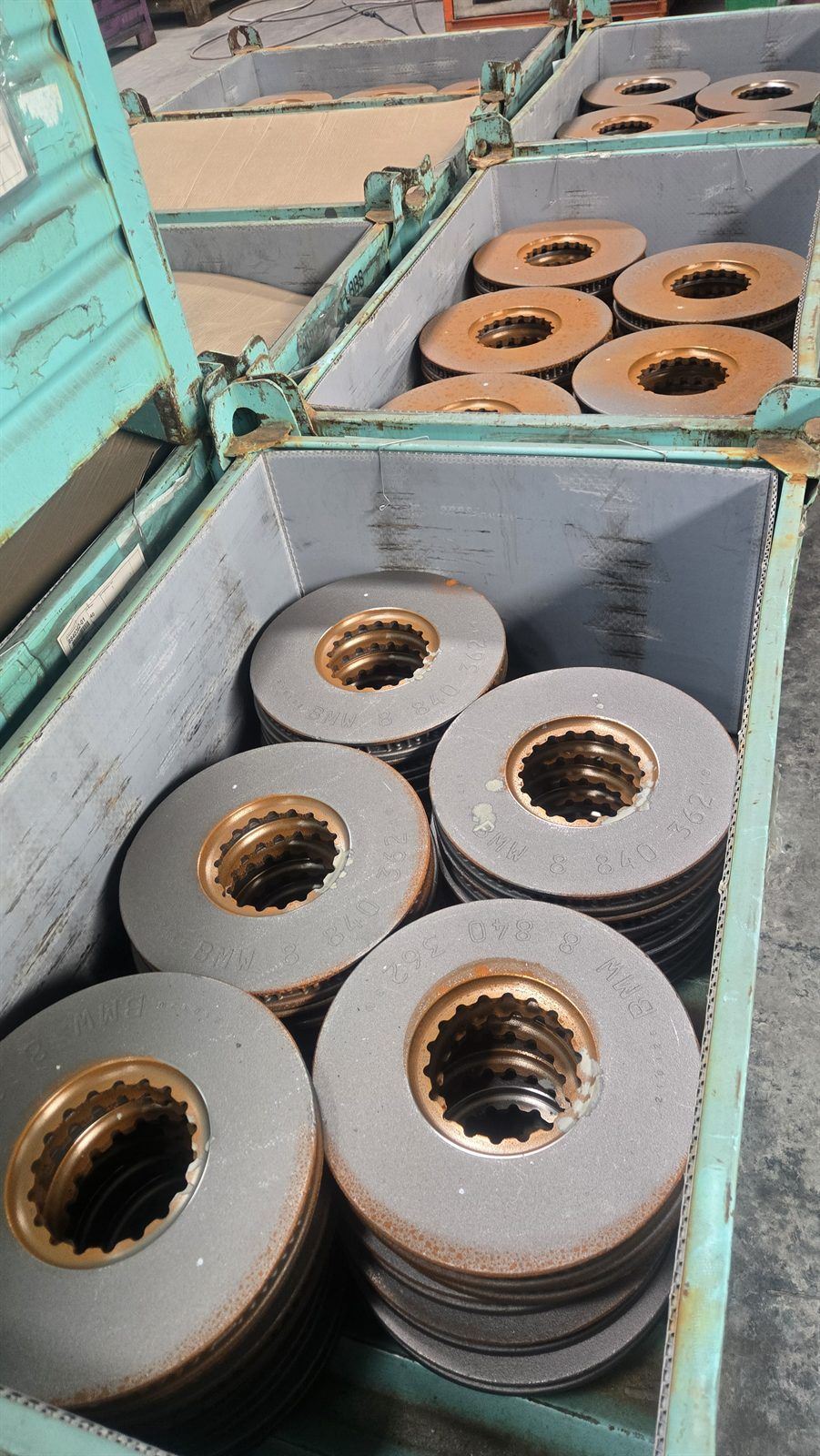
Freshly cast and forged components carry casting skin, sand and core residues, scale or burrs. Using powerful wheel blasting systems, we prepare these surfaces mechanically – quickly, reproducibly and in series. For high volumes we operate five large blasting systems of different designs.

Process

Wheel blasting

In wheel blasting, rotating turbines – the blast wheels – accelerate the blasting media purely mechanically and throw it onto the workpiece at high speed without compressed air. The impact energy releases casting skin, sand, scale and rust from the surface.

The throwing speed, the point of impact and the blade shape determine the blast pattern and thus the quality. Because large quantities of blasting media are moved per unit of time, the process is particularly economical for high volumes and ideal for cast, forged and steel components. The blast chambers are lined with wear-resistant manganese steel or with replaceable wear plates.
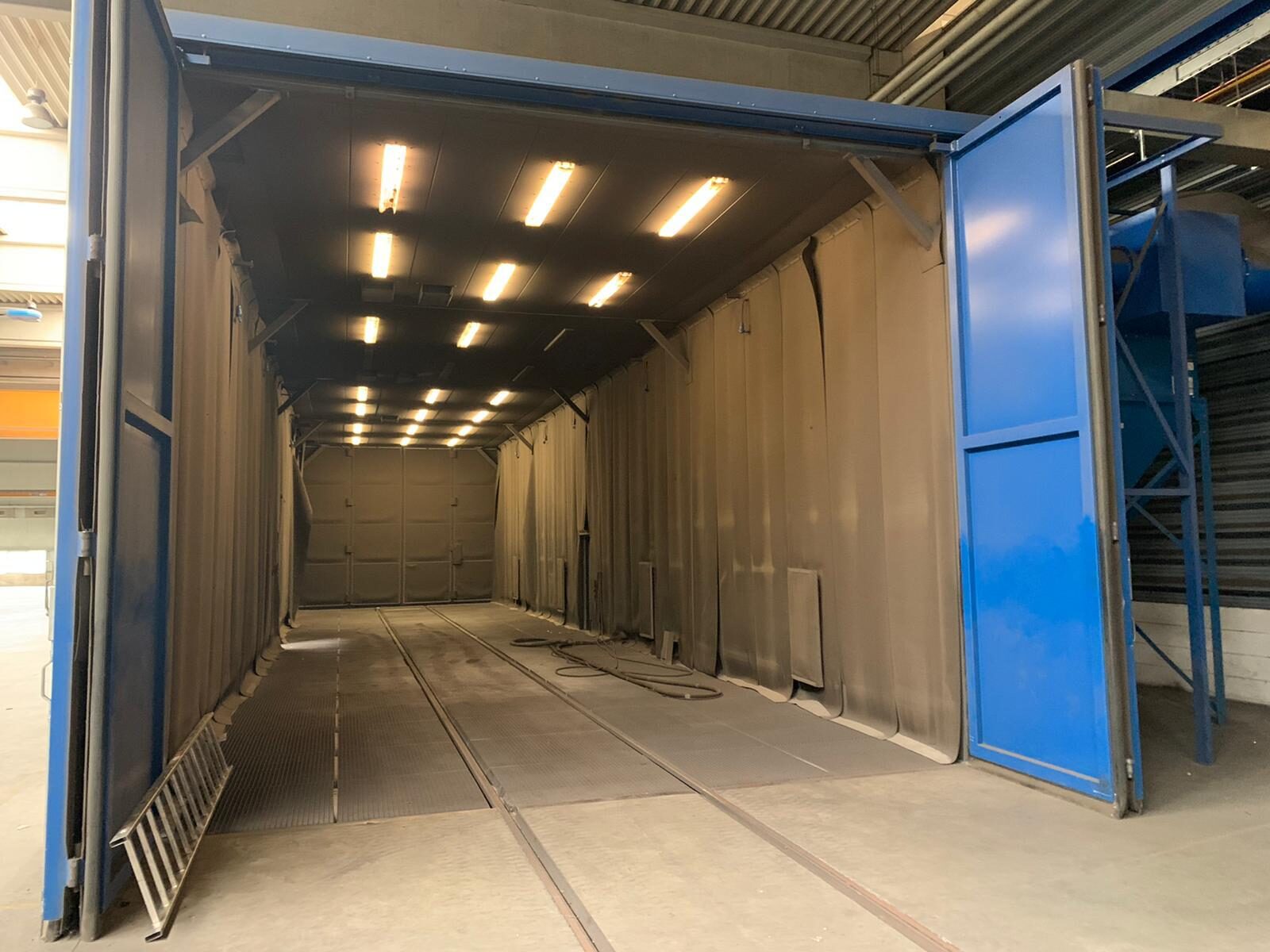
Blast chamber of a wheel blasting system
Blast chamber of a blasting system – lined with wear-resistant plates.
Machinery

Five large blasting systems – the right design for every part

Which system is used depends on the size, geometry and quantity of the components. We operate five large blasting systems and thus cover a broad range of parts, from bulk goods to castings weighing several tonnes. In practice we carry this out as sandblasting of individual components or as continuous shot blasting of entire series.
01

Continuous / roller conveyor blasting system

The workpieces are placed on a roller conveyor or a wire belt and conveyed continuously through the blast chamber. Particularly suitable for flat, long parts – sheets, plates, profiles, tubes – and for series with a high throughput.

02

Continuous overhead rail blasting system

The parts hang on rotating hooks and are transported automatically into the chamber, where they are blasted on all sides while rotating. From castings weighing several tonnes to delicate aluminium parts – flexible and gentle.

03

Trough belt blasting system

Bulk goods and small parts are gently tumbled on a trough belt and blasted all over in the process. This allows large quantities of small parts to be processed evenly and without damage.

Blasting media & effects

One process, many results

We control the result precisely through the choice of blasting media: steel grit and steel shot for powerful descaling and cleaning of steel and cast iron, stainless steel shot for stainless steels and aluminium, corundum for sharp-edged roughening, glass beads for matt finishing and compacting. Depending on the task, this gives us different effects:

Sand removal & core removal

Sand and core residues are completely removed from castings.

Descaling & derusting

Mill scale, scale and rust are removed without leaving residues.

Deburring

Casting burrs and sharp edges are broken and smoothed.

Roughening

A defined surface roughness as the optimum key for coatings.

Shot peening

Compressive residual stress increases the fatigue strength of highly loaded parts.

Matt finishing & finish

An even, decorative surface appearance on request.

Surface result

Before & after

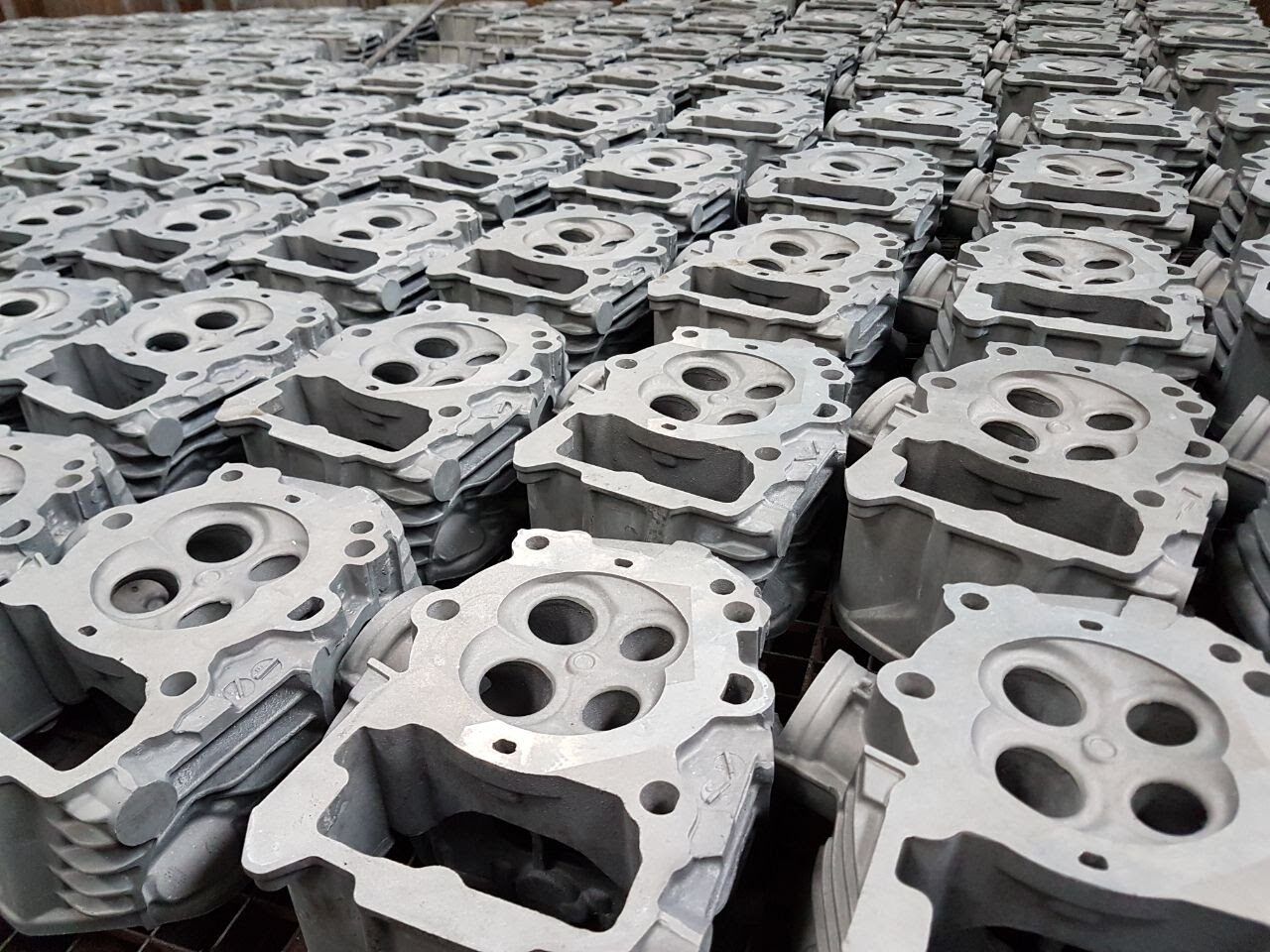
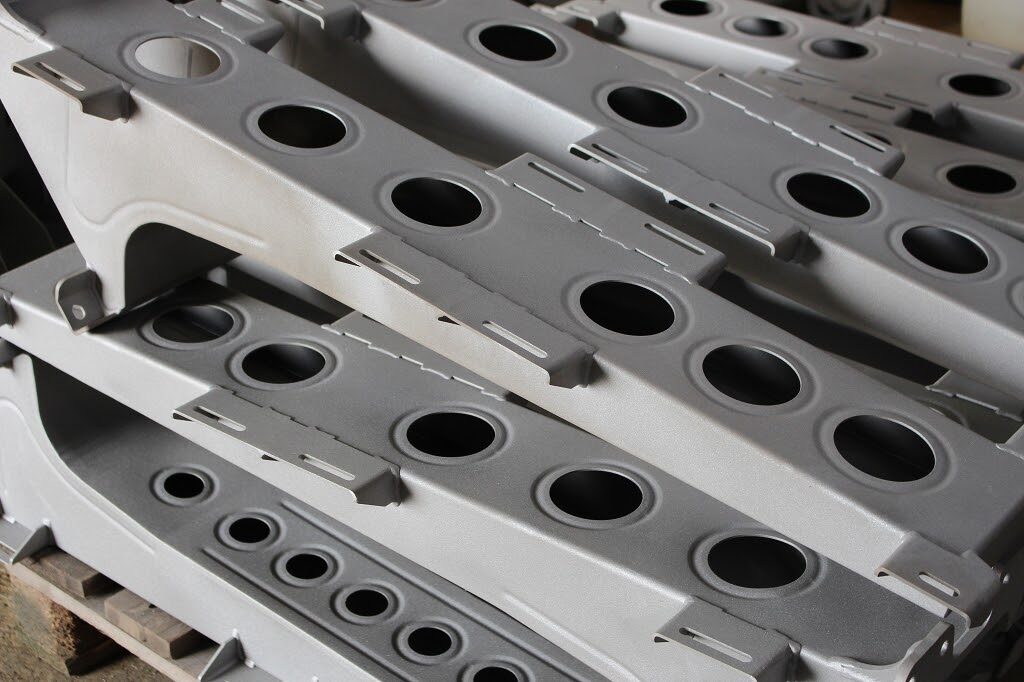
A rough, contaminated raw part surface becomes an even, clean and defined substrate – the basis for every high-quality coating.

Before · initial condition

  • Raw part from casting or forging
  • Casting skin as well as sand and core residues
  • Scale, mill scale and flash rust
  • Burrs and sharp edges
  • Old or defective coatings
  • Uneven surface with poor wetting properties

After · following blasting

  • Defined substrate, ready for coating
  • Evenly matt, clean surface
  • Defined, reproducible surface roughness
  • Bare metal substrate (up to Sa 2½–Sa 3 to ISO 8501-1)
  • Burr-free, dimensionally accurate edges
  • Optimum adhesion base for powder, paint or cathodic dip coating

The images show real results from our production. We are happy to add genuine before/after pairs of the same component – simply send us photographs of your raw part.

FAQ

Frequently asked questions

What is wheel blasting?

Mechanical blasting without compressed air: rotating blast wheels accelerate the blasting media and throw it onto the workpiece at high speed.

Which surface preparation grade can be achieved?

Up to a bare metal substrate of Sa 2½–Sa 3 to ISO 8501-1, with a defined, reproducible surface roughness.

Which blasting media are used?

Depending on the material and the objective: steel grit and steel shot, stainless steel shot, corundum or glass beads.

What is the process suitable for?

For cast, forged and steel components in series production: sand removal, descaling, deburring, roughening and shot peening.

Need castings de-sanded, descaled or blasted ready for coating?

Tell us the part size, material and quantity – we will select the appropriate system and the right blasting media and deliver a reproducible result.

Send enquiry
Related services