
← All services Industrial Services · IS.01

Thermal cleaning

Residue-free cleaning of tools, heat exchangers and electric motors – gentle on the metal.

When tools, plant parts or equipment are clogged with polymer, resin or paint residues, replacement is usually more expensive than reprocessing. Thermal cleaning frees such parts completely of organic deposits and gives them a second life – for plastics processors, the electrical industry and operators of paint shops.

The process in detail

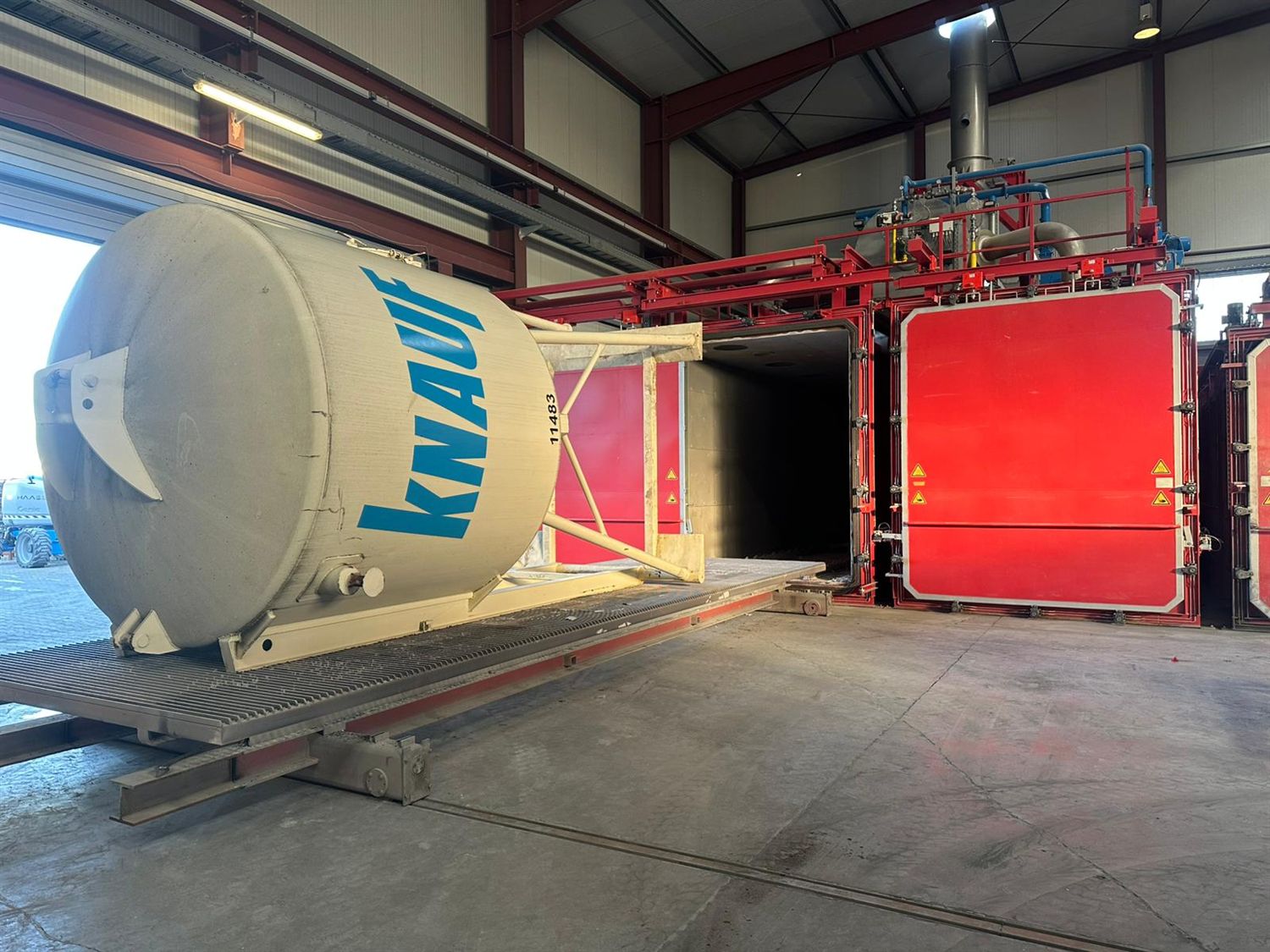
Thermal cleaning uses the principle of pyrolysis to decompose organic deposits such as paints, plastics, resins and oils under controlled conditions. In the furnace the component is heated in an oxygen-reduced atmosphere; the reduced amount of oxygen prevents the parts from burning or distorting. The resulting gases are converted almost completely in an afterburner at around 850 °C.

The component is cleaned gently and without residue, with no damage to the metal structure – complex geometries and cavities are also reliably reached. We then remove the remaining fine ash layer by blasting or by high-pressure and steam jetting; on request the parts are afterwards passivated or preserved. Which groups of components are suitable for this is shown in the article on thermal cleaning of coating racks, gratings and tools; for conveying equipment, see stripping hooks, hangers and chains.

Suitable components and materials

Temperature resistance of the base material is a prerequisite. The process has proven itself for extruder screws, nozzles, tools, hot runners and breaker plates from plastics processing, for stators and components of electric motors, for caked-up heat exchangers and filters, and for temperature-resistant parts such as springs, magnets, rotary tables and separator vessels. From paint shops there are also gratings, skids and conveying equipment – clogged gratings obstruct the air flow in the booth and impair painting quality.

  • Tools, nozzles and equipment from plastics processing
  • Heat exchangers and plant components
  • Stator and electric motor components
  • Preparation for reprocessing and recycling

The economic core of the process is reuse: clogged tools, equipment and plant parts can be reprocessed instead of replaced, and incorrectly coated parts can be recovered instead of being scrapped. Sensitive or installed components that must not go into the furnace are instead cleaned by dry ice blasting in the installed condition.

Quality assurance and documentation

Control is exercised through the furnace regime: temperature and oxygen content determine whether the deposits are decomposed completely without altering the material. After the ash has been removed we check the component for freedom from residues – with nozzles, hot runners and breaker plates what matters is a completely clear bore, with equipment from powder coating lines it is the bare, electrically conductive contact point. On request we document the reprocessing for your maintenance records.

Key facts

Principle
pyrolysis, thermal
Property
gentle, residue-free
Components
tools, heat exchangers, electric motors
Purpose
reprocessing, repair, recycling
Component in front of the glowing pyrolysis furnace
FAQ

Frequently asked questions

Which components can be thermally cleaned?

Extruder screws, nozzles, tools, hot runners and breaker plates from plastics processing, stators and components of electric motors, heat exchangers and filters, as well as temperature-resistant parts such as springs, magnets, rotary tables and separator vessels. In addition, gratings, skids and conveying equipment from paint shops.

Is the metal damaged in the process?

No. Cleaning takes place in an oxygen-reduced atmosphere, so the metal structure remains undamaged. Temperature resistance of the base material is a prerequisite.

Are bores and cavities cleared as well?

Yes. Complex geometries and cavities are also reliably freed of residues – with nozzles, hot runners and breaker plates we check that the bore is completely clear.

What happens to the remaining ash?

It is removed by blasting or by high-pressure and steam jetting. On request, the parts are then passivated or preserved.

How does this differ from thermal paint stripping?

The principle is the same. Thermal paint stripping deals with built-up coatings, thermal cleaning with process-related deposits such as polymers, resins and oils.

Related processes
From our knowledge base

Components to be reprocessed?

Tell us about the component and the contamination – we will assess thermal cleaning.

Send enquiry