Knowledge base

Stripping hooks, hangers & chains

Paint hooks, hangers, racks, crossbars and conveyor chains are coated along with the parts in every coating operation. Over time they build up paint – the insulating paint layer disrupts earthing, alters dimensions and impairs the coating result. We strip this operating equipment reliably: thermally or chemically, depending on the material and the coating.

Range of parts

What we strip

From a single wire hook to a complete conveyor chain – we clean the full range of coating aids and operating equipment.

Paint hooks

S-hooks, C-hooks and rotating hooks in all wire gauges.

Hangers & crossbars

Cantilever frames and cross members for continuous lines.

Racks & workpiece carriers

Fixtures for single and multiple loading.

Conveyor & transport chains

Chains and conveyor systems from paint lines.

Dipping frames & fixtures

Fixtures from dipping and cathodic dip-coating lines.

Hook bars & spindles

Multiple suspensions and rotating units.

Paint line components

Nozzles, sheet metal parts, masking and covers.

Incorrectly coated parts

Rejects for reuse instead of scrapping.

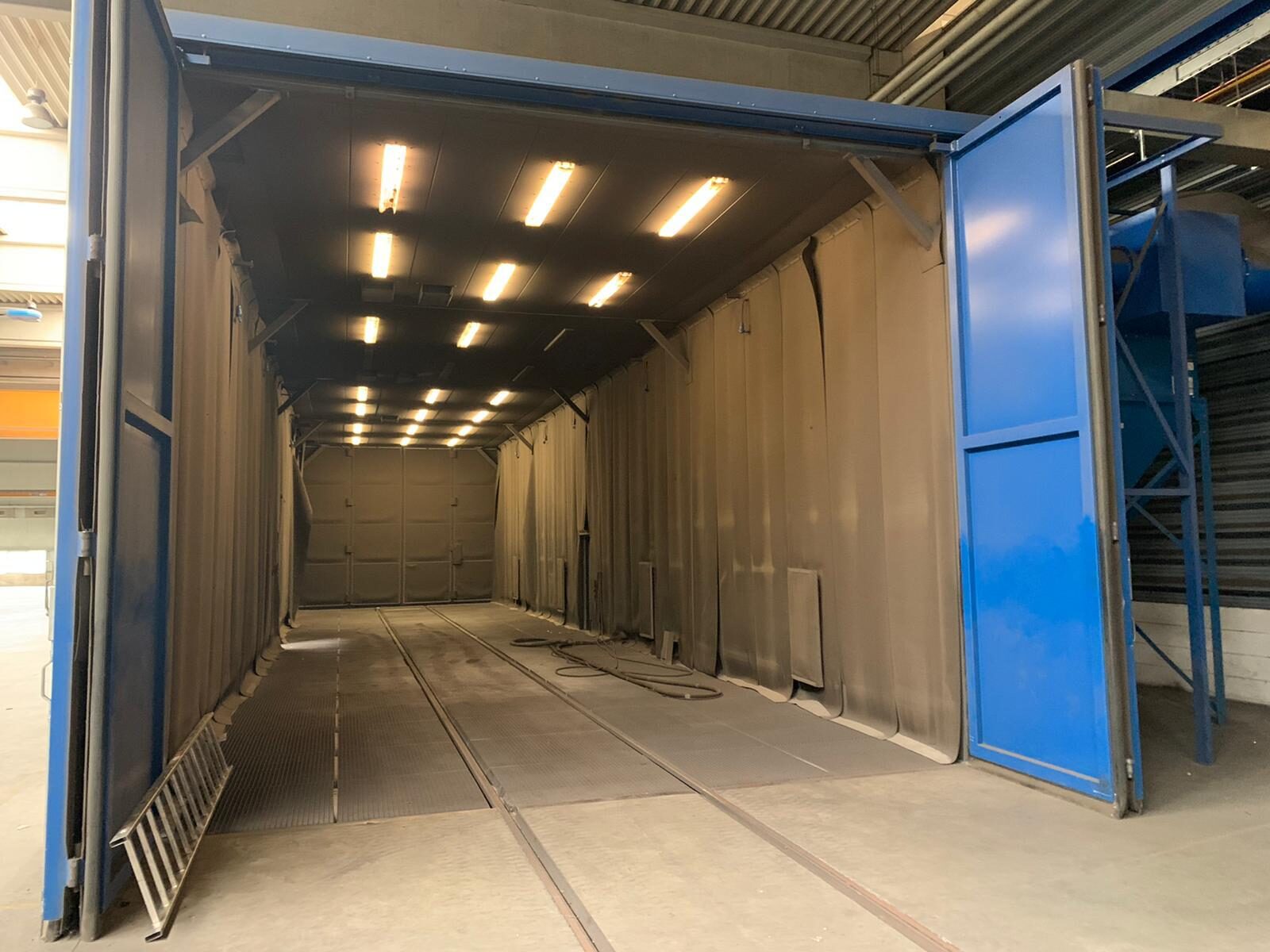
Blasting system for post-cleaning of stripped operating equipment
Blasting system for post-cleaning of stripped operating equipment.
Background

Why paint build-up on fixtures becomes a problem

Cured paint acts as an electrical insulator. In powder coating in particular, this has noticeable consequences:

Earthing & safety

Electrostatic powder coating requires reliable earthing. Hooks and workpiece carriers with heavy paint build-up no longer offer a bare contact point – poor charging, uncontrolled discharges and an increased risk are the result. Bare contact points ensure a low earth resistance.

Consistent coating thickness

Clean, conductive fixtures ensure an even powder application and reduce rejects.

Dimensional accuracy & fit

Without paint build-up, workpieces fit precisely into their fixtures again – important for automated lines.

Retaining value instead of buying new

Refurbished hooks and racks can be reused many times; cyclical stripping is usually more economical than disposal and new purchase.

Process 1

Thermal paint stripping (pyrolysis)

For heat-resistant steel hooks, racks, crossbars and chains. In the furnace, the paint decomposes under an oxygen-reduced atmosphere; the pyrolysis gases are post-combusted and the ash residues are then blasted off. Economical for large quantities and thick paint build-up.

More on thermal cleaning →

Process 2

Chemical paint stripping (dip & spray)

For heat-sensitive, thin-walled or dimensionally critical parts. The stripping medium dissolves the paint in the stripping bath or by spraying – gently and without distortion. Ideal where no thermal load is permissible.

More on dip & spray stripping →

For particularly sensitive or thin-walled parts, purely mechanical stripping with ultra-high-pressure water is also possible – free of chemicals and gentle on the material.

Your benefits

Refurbish instead of dispose

Cyclical refurbishment

Regular stripping keeps operating equipment permanently ready for use.

Reliable earthing

Bare contact points for stable electrostatics and greater process reliability.

Consistent quality

Even coating thickness and fewer rejects in the coating process.

Dimensionally accurate fixtures

Precision of fit for automated conveying and paint lines.

Retaining value

Reuse many times over instead of costly new purchases.

Sustainable

Less waste and material consumption – conserving resources.

FAQ

Frequently asked questions

Why do paint hooks and hangers have to be stripped?

Cured paint acts as an electrical insulator. Hooks and workpiece carriers with paint build-up no longer offer a bare contact point, which disrupts earthing in electrostatic powder coating and impairs coating quality.

Which operating equipment does HAASE strip?

Paint hooks, hangers, crossbars, racks, workpiece carriers, conveyor and transport chains, dipping frames as well as incorrectly coated parts.

Thermal or chemical – which process is the right one?

Heat-resistant steel parts are usually stripped thermally by pyrolysis; heat-sensitive or dimensionally critical parts are stripped chemically by dipping or spraying. The choice depends on the material, the coating and the component.

Is refurbishment worthwhile compared with buying new equipment?

As a rule, yes. Refurbished hooks and racks can be reused many times; cyclical stripping is usually more economical than disposal and new purchase.

Is there a chemical-free process for sensitive parts?

Yes. For particularly sensitive or thin-walled parts, purely mechanical stripping with ultra-high-pressure water is possible – free of chemicals and gentle on the material.

Hooks, hangers or conveyor chains covered in paint?

Send us your operating equipment – we will select the appropriate process and return bare, conductive and dimensionally accurate fixtures to you, including collection and delivery on request.

Send enquiry
Related services