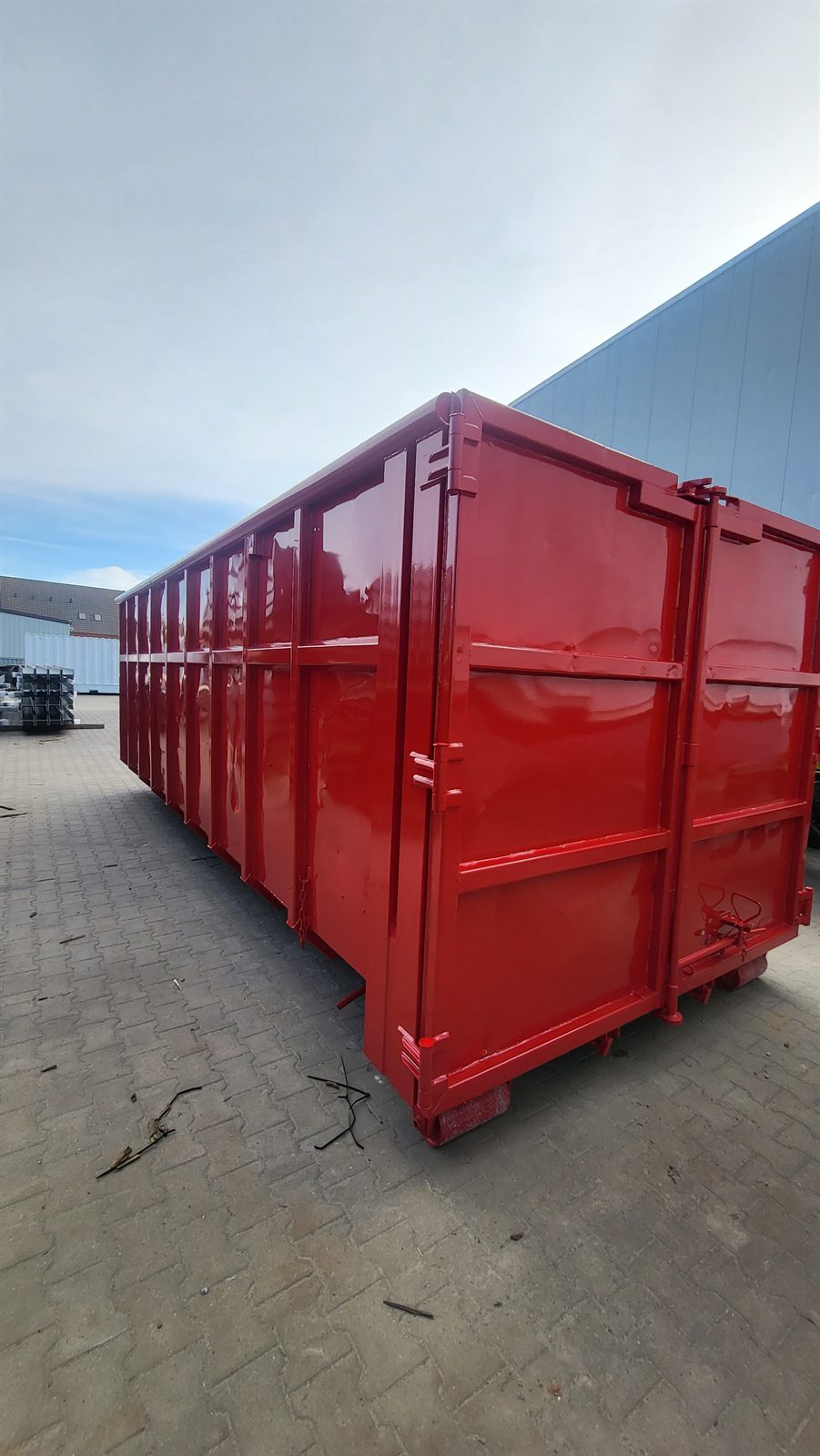
Industrial painting is our process for everything that cannot be powder coated: components beyond the oven dimensions, special colour shades and paint systems that the customer specifies in detail. Plant and steel constructors as well as vessel manufacturers commission it when a defined corrosion protection build-up has to be documented – and when the coating build-up follows not the coater but the customer's painting specification.
The process in detail
Industrial painting allows a freely definable coating build-up of primer, intermediate coat and top coat. We work to customer-specific painting specifications and paint systems – from pure corrosion protection to a decorative top coat with defined colour and gloss. Each coat is applied and flashed off as specified by the paint system before the next one follows.
The pre-treatment comes before the first coat: defined blasting with controlled roughness creates the adhesion base and determines the service life of the entire build-up. Where particularly durable protection is required, we combine wet paint with thermal zinc spraying to form a duplex system. The fundamental differences between wet paint and powder are shown in the specialist article on powder types, gloss levels and the limits of the powder process.
Suitable components and materials
Wet paint is particularly suitable wherever very large components, special colour shades or particular paint systems are required that cannot be reproduced by the powder process. Our own vehicle fleet for large parts up to 15 m in length and 28 t is available for delivery to the customer – painting and delivery of large structures thus come from a single source.
- Large components, vessels and steel structures
- Components with a defined corrosion protection build-up
- Special colour shades and customer-specific paint systems
- Combination with blasting and thermal zinc spraying (duplex)
Because pre-treatment, coating, inspection and delivery are all located at one site, transport between several service providers and the associated interfaces are eliminated: a component is blasted or stripped, then painted, inspected and delivered – without intermediate stages standing uncoated in the yard and starting to rust again.
Quality assurance and documentation
Coating thickness, colour shade and gloss level are recorded by measurement and checked against the painting specification – colour shades to RAL and NCS. Surface quality is therefore a characteristic value and not a visual check: the preparatory blasting roughness is measured as well, because it determines adhesion and thus the service life of the entire coating build-up.
On request, we carry out an initial sample inspection before series release and supply digital coating reports that make process parameters and test values traceable – an important element for initial sample approval, series delivery and customer audits. Within the HAASE Group, PICTUM Oberflächentechnik works in accordance with ISO 9001 and thus to a certified quality management system; we align our own procedures with the same reproducible, verifiable standards.
Key facts
- Process
- wet paint, multi-layer
- Basis
- customer-specific painting specification
- Suitability
- including large components
- Testing
- coating thickness, colour shade, gloss