Knowledge

Powder coating

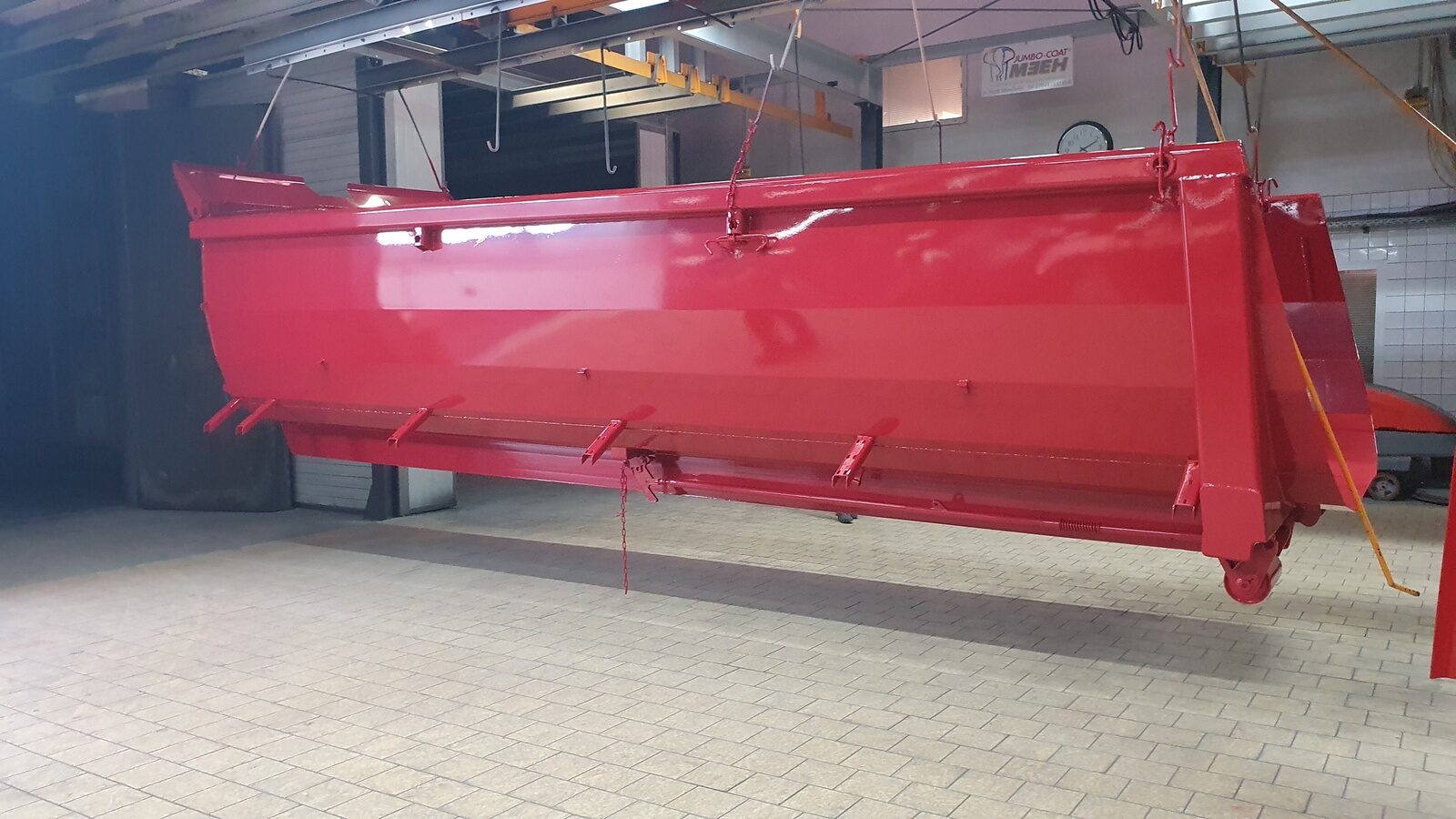
Powder coating enhances and protects metal surfaces with a solvent-free, oven-cured film – robust, decorative and in virtually any colour shade. A single operation produces a closed, uniform layer with high corrosion, chemical and mechanical resistance.

Process

Coated in four steps

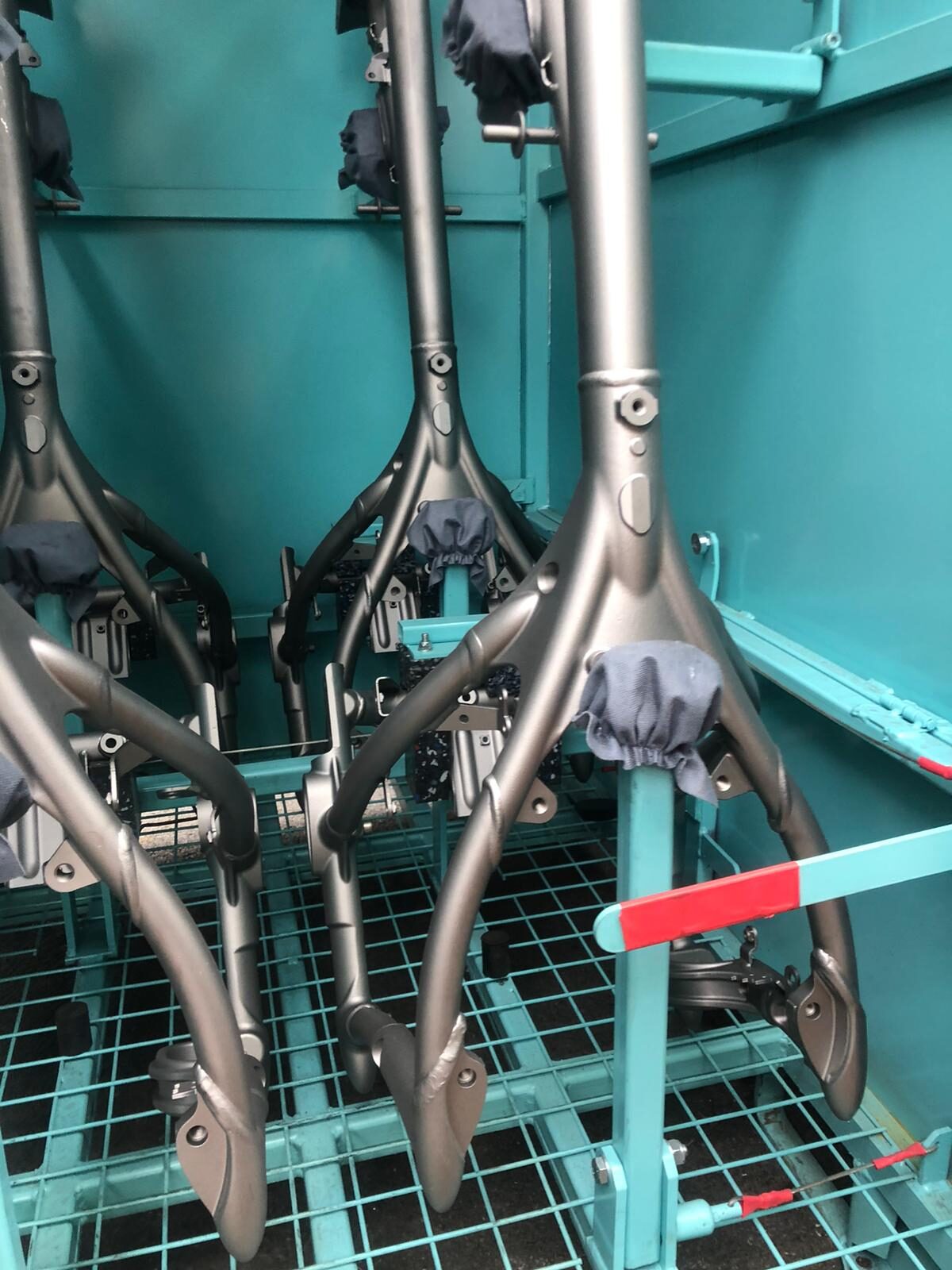
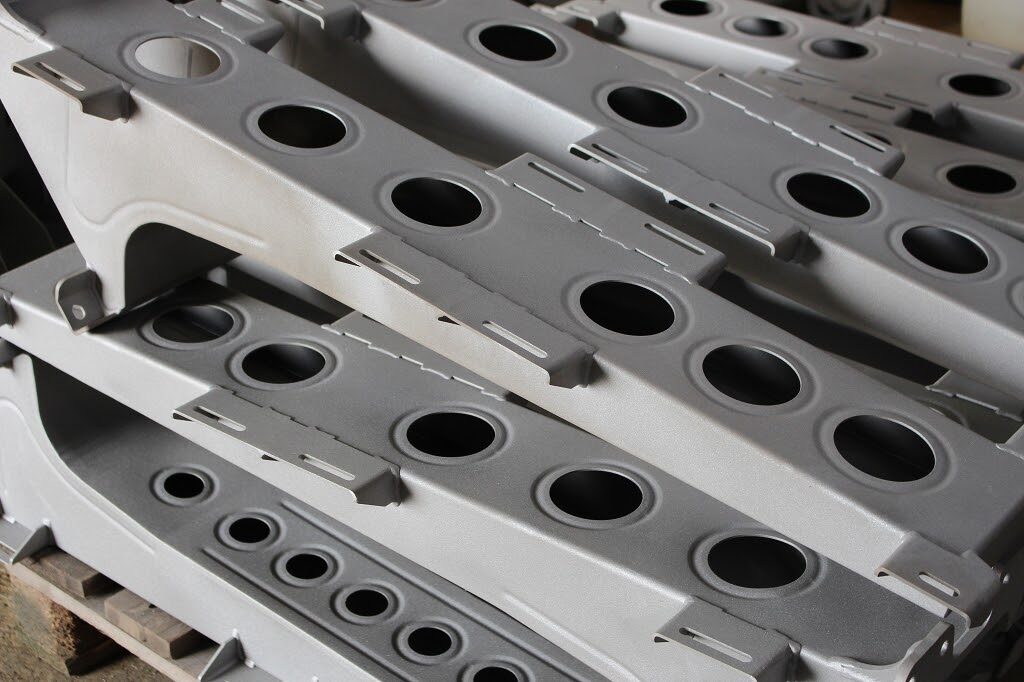
Powder coating is an electrostatic process: dry powder coating material is charged, adheres to the earthed component and is then cured in the oven to form a solid film. A clean, professional pre-treatment is decisive for the result. We carry out this pre-treatment by blasting the components to a defined standard before powder coating from small to large series is commissioned.
01

Pre-treatment – cleaning & activating

Oil, grease, scale and rust are removed – by degreasing, blasting or chemical pre-treatment (e.g. phosphating, passivating). The conversion-treated, dry surface ensures adhesion and corrosion protection.

02

Application – applying electrostatically

The powder coating material is charged by a corona or tribo gun and sprayed onto the earthed workpiece. The powder adheres uniformly – including in areas that are difficult to access; overspray is extracted and reused.

03

Curing – melting & cross-linking

In the oven the powder melts at around 160–200 °C, flows out and cross-links to form a closed layer. Depending on the powder and the wall thickness this takes about 10–30 minutes.

04

Inspection – cooling & checking

Controlled cooling is followed by quality control – coating thickness, adhesion and surface quality are checked.

Powder types & colours

Controlling properties precisely

The powder type and formulation allow us to determine resistance and appearance – matched to the place of use and the requirement.

Exterior

Polyester

Weather- and UV-resistant – the first choice for exterior areas, façades and visible components (quality classes to GSB and Qualicoat).

Interior

Epoxy

Excellent chemical and corrosion resistance for interior use; can also be used as a primer.

Hybrid

Epoxy-polyester

Robust interior coating with good flow and good chemical resistance.

Colour shades to RAL and NCS as well as special and effect colours (metallic, micaceous iron oxide). Gloss levels from matt through satin gloss to high gloss; surfaces smooth or textured (fine and coarse texture). Please note: a powder-coated RAL shade may deviate slightly from the same RAL shade on other materials.

Quality & testing

Reproducible and verifiable

Consistent quality is the result of controlled processes and testing on the finished part. Within the HAASE Group, PICTUM Oberflächentechnik works to ISO 9001.

Tests & guidelines

  • Coating thickness: typically 60–120 µm, measured to DIN EN ISO 2360 / 2178.
  • Adhesion: cross-cut test to ISO 2409.
  • Gloss level: measurement to ISO 2813.
  • Corrosion protection: salt spray test on the test panel.
  • Quality guidelines: GSB, Qualicoat and QIB as a reference.
  • Process control: pre-treatment baths and oven temperatures are monitored.
Benefits

Why powder coating

One operation, thick layer

Closed, uniform film without repeated overcoating.

High level of protection

Very good corrosion, chemical and weather resistance.

Mechanically resilient

Impact- and scratch-resistant surface with good elasticity.

Good edge coverage

Edges and areas that are difficult to access are also reliably covered.

Environmentally friendly

Solvent- and VOC-free; overspray is recovered and reused.

Durable & easy to maintain

Lasting protection with little maintenance and care effort.

Suitable for steel, aluminium, hot-dip galvanised and stainless steels – from single parts to high-volume series, for mechanical engineering and metal fabrication, vehicle parts, façades and furniture.

FAQ

Frequently asked questions

How does powder coating work?

Electrostatically charged powder coating material adheres to the earthed component and is cured in the oven to form a closed film.

At what temperature is the coating cured?

At around 160–200 °C; approximately 10–30 minutes depending on the powder and the wall thickness.

What coating thickness is typical?

Typically 60–120 µm, measured to DIN EN ISO 2360 / 2178.

Which colours and surface finishes are possible?

All RAL and NCS shades as well as special and effect colours, from matt to high gloss, smooth or textured.

Which materials is the process suitable for?

For steel, aluminium, hot-dip galvanised and stainless steels.

Powder coating to your specification – from single parts to high-volume series

Tell us the material, colour shade (RAL/NCS), gloss level and quantity – we will select the pre-treatment and the powder to match your requirement.

Send enquiry
Related services