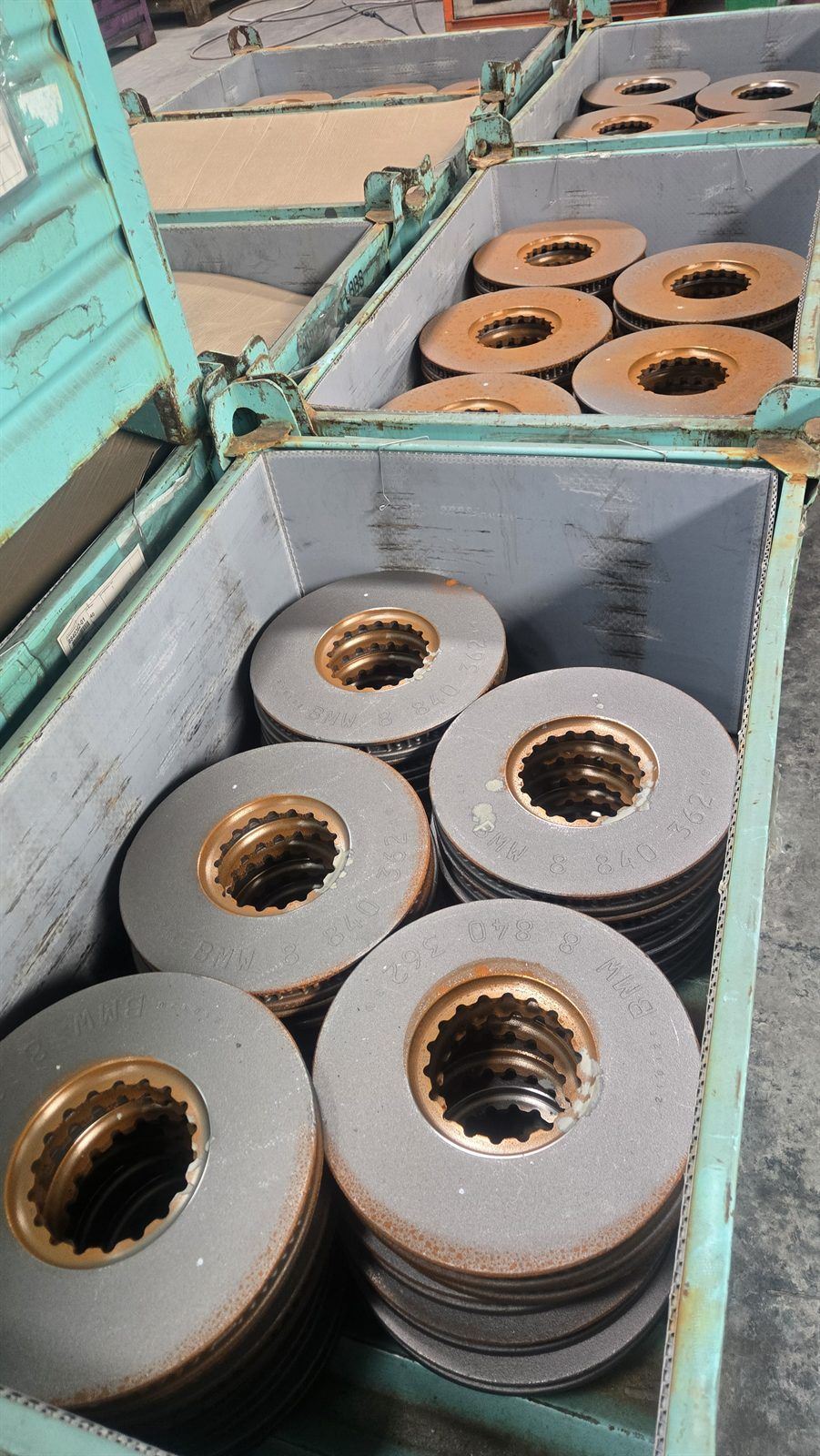
Where steel components are permanently exposed to the weather, a paint coating alone is often not sufficient. Thermal spraying applies a metallic zinc or tin layer to the component that actively protects the steel – even if the surface is damaged at a later stage.
The process in detail
In thermal spraying, zinc or tin is melted and applied as a fine layer to the prepared component. The metallic protective layer acts as active, cathodic corrosion protection: unlike a paint coating, which merely covers the surface, the less noble zinc sacrifices itself in favour of the steel. If the layer is damaged at individual points, protection is maintained at those points.
A defined blasting pre-treatment is a prerequisite – the sprayed coating only keys permanently to a sharp-edged, roughened and metallically clean surface. How this blast profile is created and what role it plays for adhesion is explained in the article Blasting as preparation for metallic coatings.
Thermal zinc spraying often forms the basis for a duplex system: combined with a subsequent powder coating or wet paint coating, it produces corrosion protection with a considerably longer protective life – the metallic layer protects actively, while the organic top coat slows down the loss of zinc and provides the colour shade.
Suitable components and materials
The process is intended for steel components with high corrosion protection requirements, in particular for outdoor use and exposure to the weather. Existing components can also be upgraded instead of being replaced, following prior paint stripping and blasting pre-treatment.
- Steel structures with high corrosion protection requirements
- Components for outdoor use and exposure to the weather
- Basis for long-lasting duplex systems
- Repair and upgrading of existing components
Pre-treatment, sprayed coating and top coat all take place at the same site: the component is blasted, given its metallic coating immediately afterwards and – if a duplex system is required – then powder coated or wet painted. This is not only simpler in logistical terms but also relevant to quality, because the blasted surface is not placed in interim storage where it could start to rust again.
Quality assurance and documentation
The pre-treatment is safeguarded by measuring the blast roughness, as this is the critical factor for the adhesion of the sprayed coating. As a substrate we aim for a metallically clean condition of the kind produced by blasting to Sa 2½ to Sa 3 in accordance with ISO 8501-1 – only then does the molten layer key permanently.
If the sprayed zinc layer is extended into a duplex system, we additionally check the coating thickness, colour shade and gloss of the top coat. On request we document the measured values in digital reports and carry out an initial sample inspection before series release. Because corrosion protection is a long-term property that cannot be read off the finished component, this process and inspection documentation is the actual proof for your client.
Key facts
- Coatings
- zinc, tin (thermally sprayed)
- Protection
- active/cathodic, long-lasting
- Combination
- duplex with paint/powder
- Pre-treatment
- defined blasting