Knowledge

Dip & spray stripping

In chemical paint stripping the paint layer is not heated but dissolved by a stripping medium – gently and without distortion. This makes the process ideal for temperature-sensitive and dimensionally accurate components made of aluminium, zinc or die castings. Depending on the task, we work in the dip bath or with the spray process.

Process

Dip stripping

In dip stripping the workpiece is lowered evenly into a heated stripping bath on a workpiece carrier. The bath is covered and continuously circulated so that the medium flushes around the component on all sides – cavities, profiles and complex geometries are therefore also reached in full.

The stripping agent breaks down the paint or releases its adhesion to the substrate so that the coating detaches. Depending on the paint applied, the condition of the bath and the material, the process takes about 2 to 10 hours. The part then moves on to the rinsing tank, where residual paint and stripping agent are rinsed off.
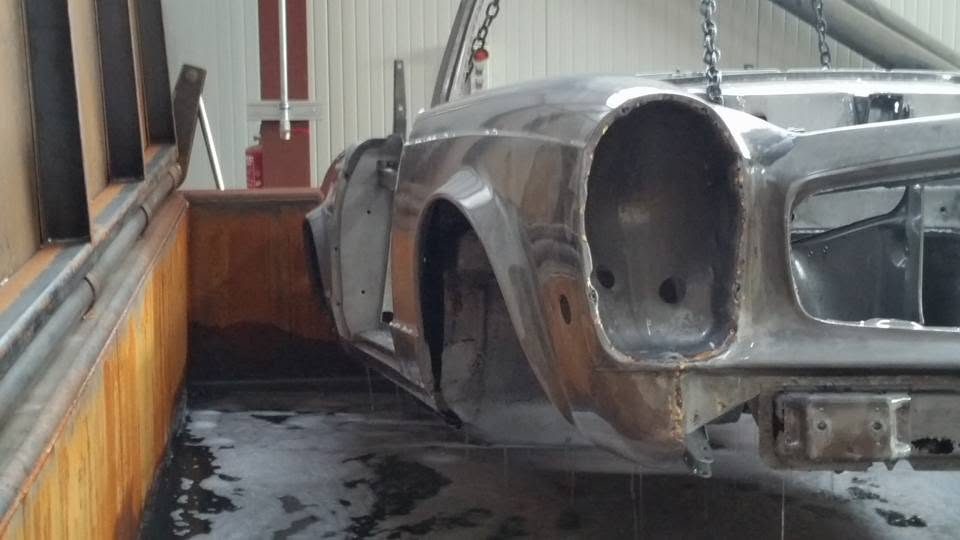
Vehicle body after dip stripping above the stripping tank
Vehicle body after dip stripping above the stripping tank.
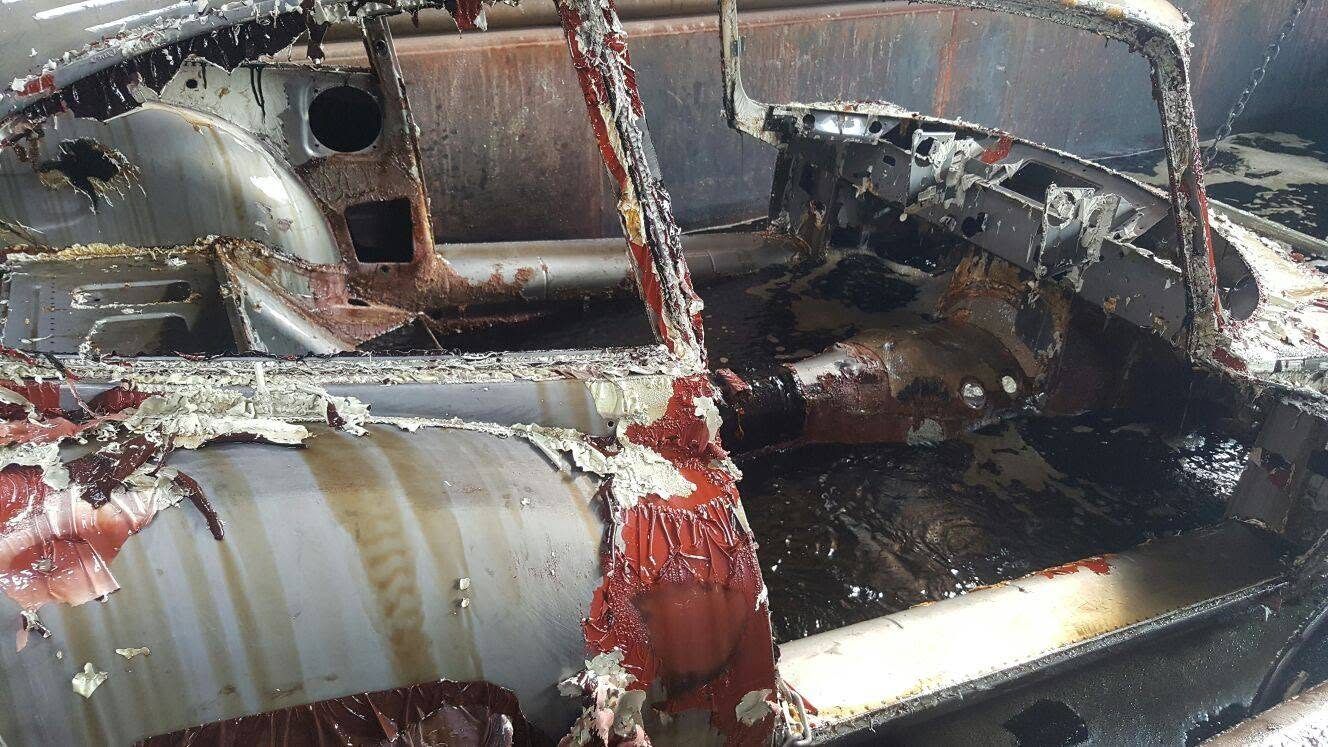
Vehicle body in the stripping bath – the coating detaches from the substrate
In the dip bath: the stripping medium releases the coating from the substrate layer by layer.
Process

Spray stripping

In spray stripping a non-foaming stripping medium is sprayed onto the surface in a targeted manner in a spray stripping system; the part is then cleaned with high-pressure water. The process works over the full area and selectively, requires less medium and is particularly economical when only the visible surface has to be stripped. We offer both variants as part of our chemical paint stripping service; for heat-resistant parts, thermal paint stripping is an alternative.

It is regarded as the most important process for removing powder coatings from steel and aluminium wheel rims as well as from profiles, windows and components made of non-ferrous metals.
Result

Before & after

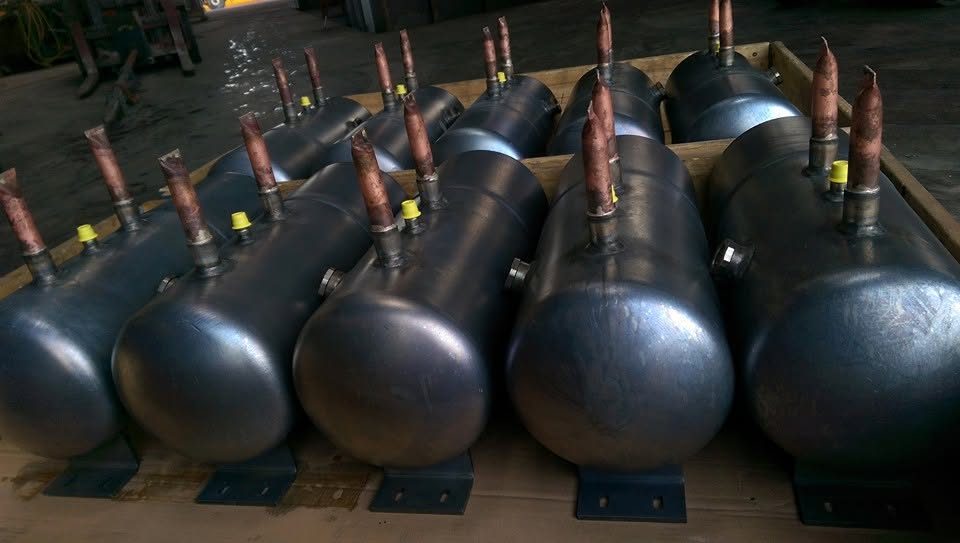
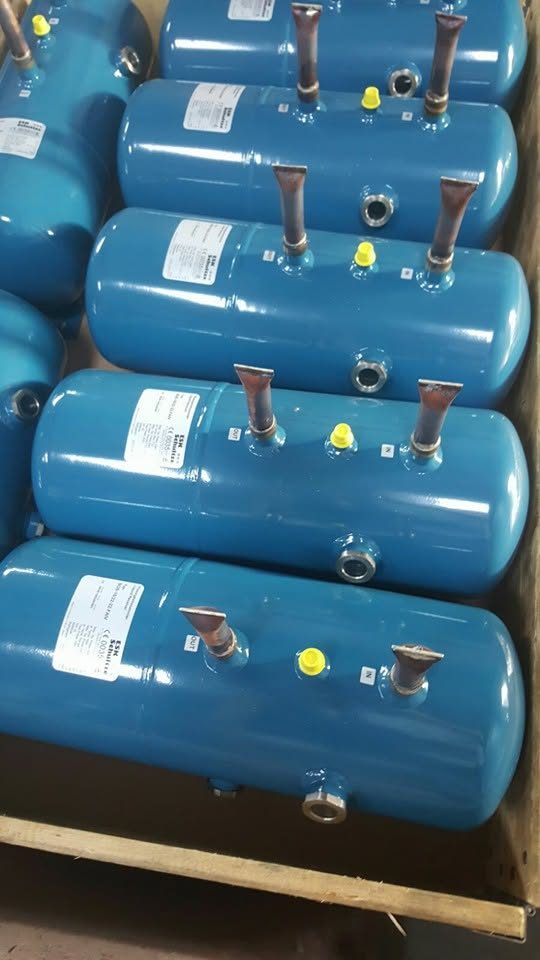
Example of series pressure vessels: in the stripped, bare condition – and after the subsequent re-coating.

Pressure vessel stripped and bare
BeforeStripped & bare
Pressure vessel newly powder-coated
AfterNewly coated
Completely stripped vehicle body
Vehicle bodyCompletely stripped
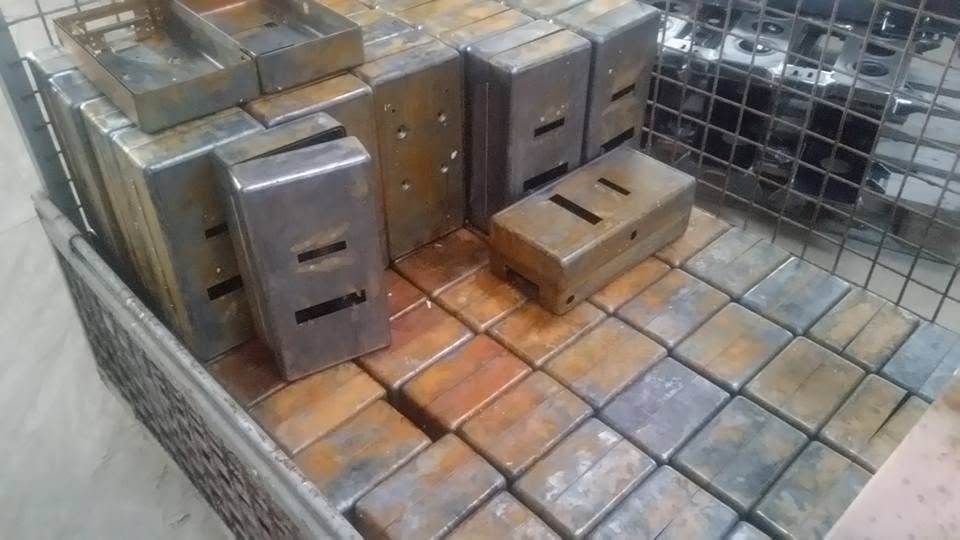
Stripped steel housings in a mesh basket
Series partsHousings & sheet metal parts
Media & materials

The right agent for every material

Which medium is used depends on the paint and the material. In principle we work with alkaline, acidic or solvent-based stripping agents – hot or cold.

75–95 °C

Alkaline

For steel parts such as sheets, ropes or magnets. Highly alkaline aqueous media are suitable for steel – but not for aluminium or zinc.

80–85 °C

Acidic

For aluminium profiles, engine parts and aluminium wheel rims – specifically matched to non-ferrous metals.

80–150 °C

Solvent-based / organic

For workpieces whose surface must not be attacked.

For sensitive materials we use mild, metal-friendly agents – aluminium continuous castings do not darken in the process. Subsequent glass bead blasting removes any last residues where required and prepares the surface optimally for re-coating.

Sequence

From the raw part to a surface ready for coating

01

Pre-cleaning – coarse cleaning

Coarse contamination, greases and oils are removed before stripping.

02

Stripping – dipping or spraying

In the dip bath or by spray process, depending on the part, the material and the coating.

03

Rinsing & neutralising

Residual medium and paint residues are rinsed off; neutralised or passivated where required.

04

Finish – blasting & coating

Optional glass bead blasting, followed by priming and re-coating.

Benefits

Why strip chemically

Gentle & free from distortion

No thermal load – the material remains unchanged.

Dimensionally accurate

Tolerances and surfaces are preserved, ideal for precision parts.

All-round

Reaches cavities, profiles and complex geometries in full.

For aluminium, zinc & die castings

The right choice for temperature-sensitive materials.

Racks, hooks & wheel rims

Equipment and series parts are stripped without residue.

Recovering rejects

Incorrectly coated parts can be saved instead of scrapped.

FAQ

Frequently asked questions

What is the difference between dip stripping and spray stripping?

In dip stripping the component lies in a heated bath and is flushed on all sides; in spray stripping the medium is sprayed onto the surface in a targeted manner and then cleaned with high-pressure water.

How long does stripping in the dip bath take?

Depending on the paint applied, the condition of the bath and the material, the process takes about 2 to 10 hours.

Which materials is chemical paint stripping suitable for?

Particularly for temperature-sensitive and dimensionally accurate components made of aluminium, zinc and die castings.

Does the component distort during chemical paint stripping?

No. The component is not heated; instead the coating is dissolved chemically – the material remains dimensionally accurate and free from distortion.

Which media are used?

Depending on the paint and the material, alkaline, acidic or solvent-based stripping agents, hot or cold.

Strip sensitive or dimensionally accurate parts gently?

Tell us the material, the coating and the quantity – we will select the process and the medium to suit your component and deliver a surface that is ready for coating.

Send enquiry
Related services